How to Identify Common Heathland Plants: A Beginner's Guide to Heather, Gorse, and Bracken
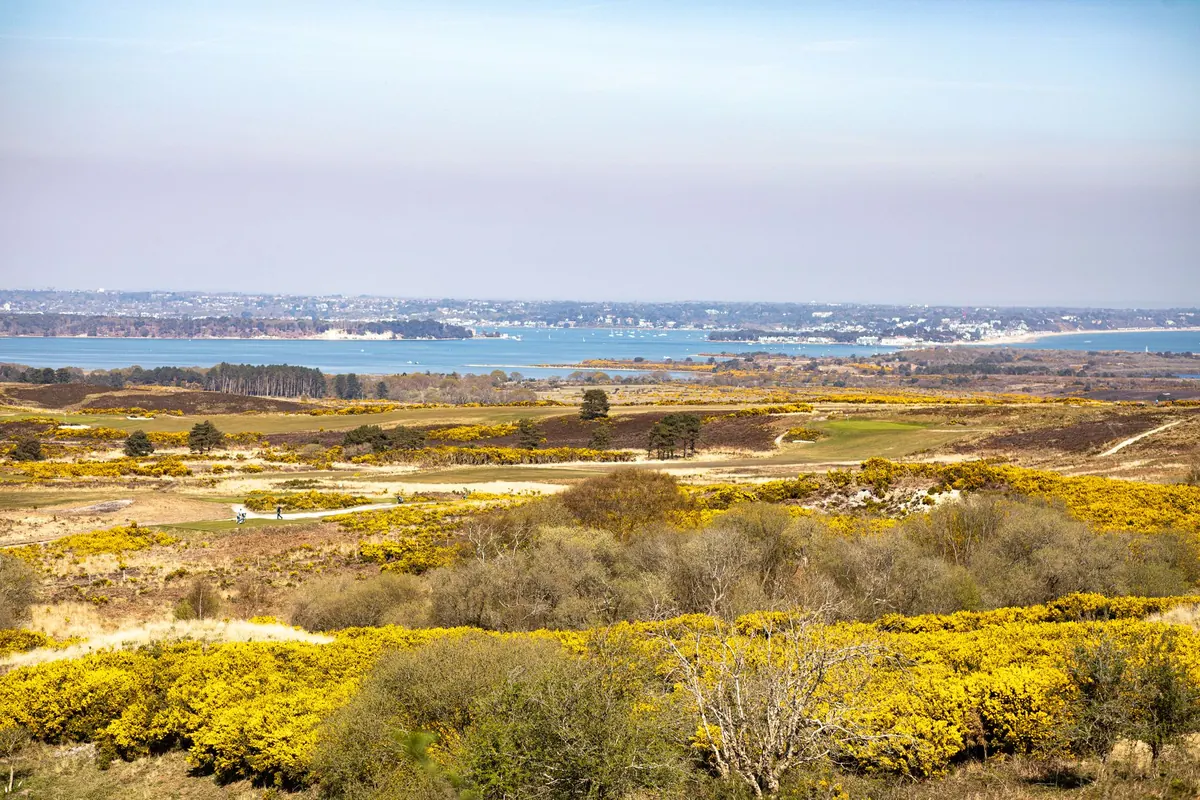
Heathland looks, at first glance, like one low carpet of brown, purple, and green. Stand still for a minute and it separates into three very different plants: the wiry evergreen heathers, the thorny yellow gorse, and the tall coppery swathes of bracken. Learn to tell them apart and every walk across a common, a coastal heath, or a moorland edge gets more interesting. You start reading the ground itself — noticing which patches stay damp, which were burned last season, and where the soil is so thin that only one plant can hold on.
Start With the Heathers
Heather is a loose word. On British and Irish heaths it usually means one of three low shrubs, all with tiny leaves and pink or purple flowers, and all flowering at slightly different times. The leaves are the reliable clue, so get close and look at how they sit on the stem.
Common heather, or ling
Ling (Calluna vulgaris) carries scale-like leaves under about two millimetres long, arranged in opposite pairs that overlap like roof tiles. Run a stem between finger and thumb and it feels ridged and wiry, like a tiny armoured cable. The flowers are pale mauve to purple, occasionally white, packed into long spikes along the upper stem, and they open from roughly late July into September. Ling likes dry, acidic, well-drained ground.
Bell heather
Bell heather (Erica cinerea) has needle-like leaves held in whorls of three. Twist the stem slowly and count the leaves that meet at each point — three means bell heather. The flowers are a deep crimson-purple, often darker and richer than ling, held in loose clusters rather than tight spikes, and they appear earlier, from around June to August. Rocky banks and dry slopes are its strongholds.
Cross-leaved heath
Cross-leaved heath (Erica tetralix) has grey-green, slightly woolly leaves in whorls of four, and flowers clustered at the very top of the stem in a compact head, usually pale pink and flowering July to September. This is the heather to expect where the ground squelches underfoot, alongside sphagnum moss and cotton grass.
A hand lens costs very little and settles most arguments. If the whorl count is unclear, snap one stem and look at it in your palm rather than fighting with the plant in situ.
Gorse: The Spiny One You Can Smell
Gorse announces itself. The coconut scent of its yellow flowers carries on warm days, and the plant is dense with sharp spines. There is no mistaking it for heather once you are within a few metres.
Common gorse (Ulex europaeus) is the big, upright one, flowering mainly in spring with a second flush in autumn. Western gorse (Ulex gallii) is lower and more matted, flowering late summer into autumn, and it dominates many western coastal and upland heaths. Dwarf gorse is smaller again. Rather than wrestling with spine length in the field, use height and flowering season first: tall and flowering in April points to common gorse, low and flowering in September points to western gorse.
Two practical notes. Do not grab gorse to steady yourself on a slope, and do wear long trousers if you plan to push through a patch — the spines go through thin fabric.
Bracken: The Fern That Changes Colour
Bracken (Pteridium aquilinum) is a fern, so it looks nothing like the other two while it is growing. In spring, fronds push up curled tightly like a fist and then unfurl into a roughly triangular shape with three main divisions on each frond. Unlike most ferns it is stiff and stands upright in dense stands.
By late summer the whole stand turns rust, then brown, and by autumn it collapses into flattened litter. In winter you are left with brittle dead stalks over bare ground, which is often how people first notice how much bracken a site holds. The plant survives below ground in deep rhizomes, which is why stands return in the same place year after year.
Read the Ground, Not Just the Plant
Once you know the three groups, the plants start telling you about the soil beneath them. Use these pairings as a first guess, then confirm with leaves and flowers.
- Ling and bell heather: thin, dry, acidic soils — sandy heaths, gravelly slopes, higher ground, and patches that have been grazed or rotationally burned.
- Cross-leaved heath: wet hollows, bog edges, and flushes where the water table sits close to the surface.
- Gorse: rough ground, field edges, roadside banks and dry slopes. It often rings a heath rather than filling the middle of it.
- Bracken: deeper, well-drained soils on slopes and in the taller fringe, where it spreads into neighbouring grassland.
All three can grow within a few steps of each other, so check what dominates each patch rather than what merely appears there.
A Field Checklist to Run Through
- Look at the leaves first: scales, needles, or fern fronds.
- Count the whorl if the plant is an Erica: three leaves, or four?
- Note the flower colour and the month. Timing narrows the options faster than colour alone.
- Smell. Coconut means gorse, every time.
- Feel the ground underfoot: dry and crunchy, or soft and spongy?
- Photograph the same plant from close up and from a step back, and note the location.
Care, Access, and Staying Safe
Heathland is a fragile habitat, and much of it sits inside protected sites with ground-nesting birds, rare reptiles, and slow-growing plants. Keep to paths where they exist, avoid trampling flower spikes, and leave the plants where they are — picking is usually not permitted on protected sites. Check local site notices for rules about dogs, fires, and access.
Ticks are common in tall bracken and rough grass. Tuck trousers into socks, check yourself afterwards, and remove any attached tick carefully with fine tweezers or a tick tool. If you later feel unwell or notice a spreading rash, speak to a pharmacist or doctor promptly.
Getting Started This Weekend
Pick one heath, common, or coastal path near you and walk it twice — once now and once in six weeks. Choose a single plant each visit and work through the checklist above. Do it in flower if you can, because flowers make the heathers far easier to separate than leaves alone. Keep a rough notebook or a phone album with dates attached; after a season you will have your own local record of what flowers when, which is worth more than any general guide. And if you only learn one thing this year, learn the whorl count — three leaves at a joint for bell heather, four for cross-leaved heath — because it turns a purple blur into three plants you can name.
Photo: Tony Zohari / Pexels